Were the Victorians the Original Goths?
It is no secret that the Victorians were deeply fascinated by death. This preoccupation reflected the era’s high mortality rates. In an age where grief was a constant presence, fashion functioned as a public expression of private loss. By modern standards, nineteenth-century Britons appear markedly morbid. They preserved keepsakes that many today would consider macabre, including jewellery crafted from hair, teeth, or other remains of the deceased.
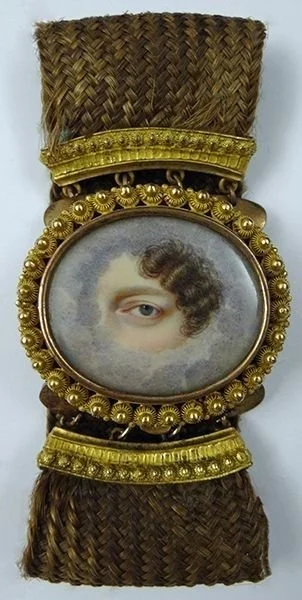
Victorian mourning jewellery often included woven hair from the deceased.
Beyond mourning, the Victorians sought to understand the afterlife. As modern science, psychology, and medicine began to develop, some attempted to apply empirical methods to the “great beyond.” This blend of curiosity and grief helped turn spiritualism and divination into fashionable parlour entertainments among the elite. The aesthetic that emerged, defined by black silk, jet jewellery, and elongated silhouettes, formed a dramatic yet restrained visual language. It later provided a foundation for Gothic subcultures.
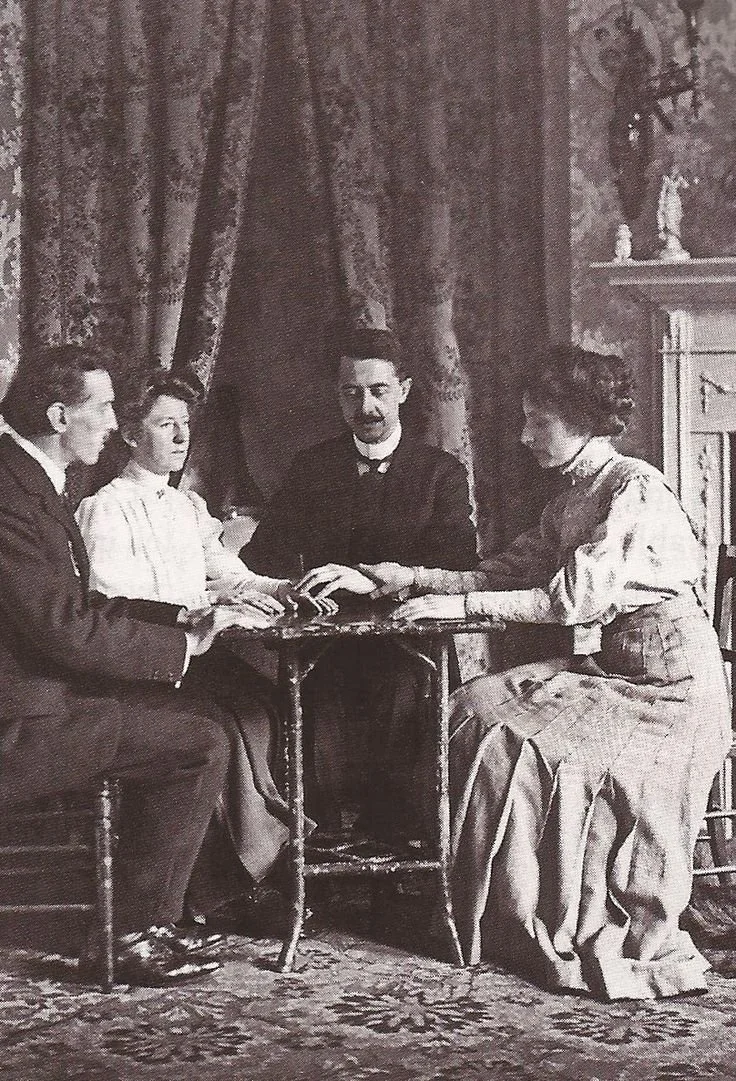
In Victorian Britain seances became popular parlour games
Victorian symbolism was more complex than the “spooky” imagery now associated with the period. Spiders signified industriousness and patience rather than menace, and serpents suggested eternity, reflecting deeper cultural meanings. Bats could represent luck or virtue, and mourning jewellery acted as a sentimental bridge between the living and the dead. Recognising this complexity helps appreciate how these symbols influenced later subcultures and their visual language.
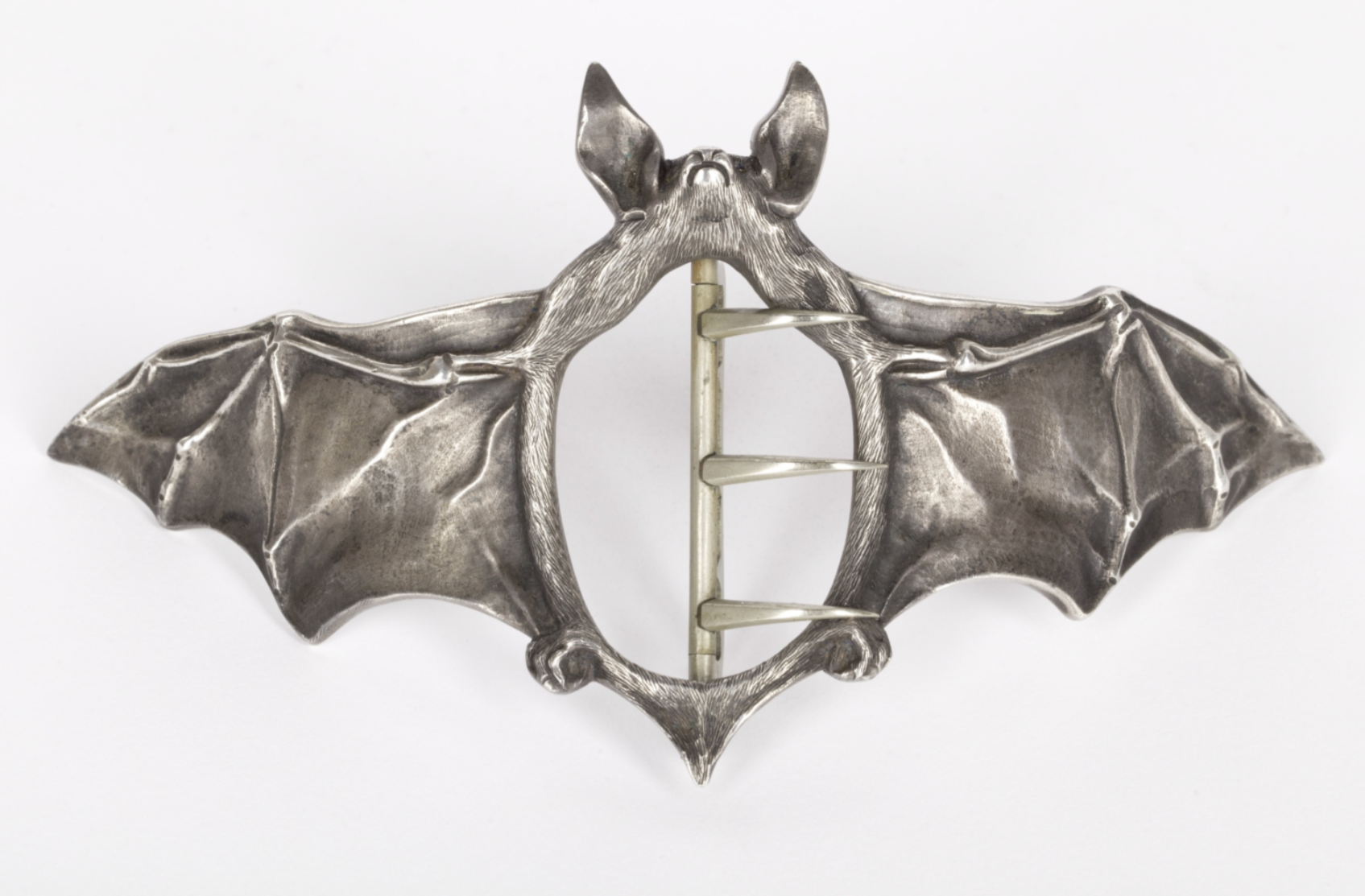
Ferdinand Earhart sterling silver bat belt buckle, 1908
These Victorian mourning forms did not vanish but evolved. In the 1920s, spider brooches and dark glamour were reframed through Art Deco geometry, maintaining their symbolic roots. When Victoriana resurfaced in the late 1960s, it took on a different role as youth culture rejected synthetic uniformity and mass production. Antique garments, high necklines, and heavy velvet became markers of dissent, directly linking Victorian mourning aesthetics to modern Gothic subcultures. By the 1980s, Goth culture intensified this inheritance, translating nineteenth-century mourning into post-punk expression and emphasising its ongoing cultural significance.

Robert Smith, The Cure
Today, Gothic Victoriana resurfaces once more. In an age defined by fast fashion, digital excess, and instability, it offers structure, craft, and historical depth. Its repeated revivals suggest that in uncertain times, we return to the past not for nostalgia but for symbolism, discipline, and as an act of resistance, encouraging the audience to see it as a powerful statement of identity and resilience.